


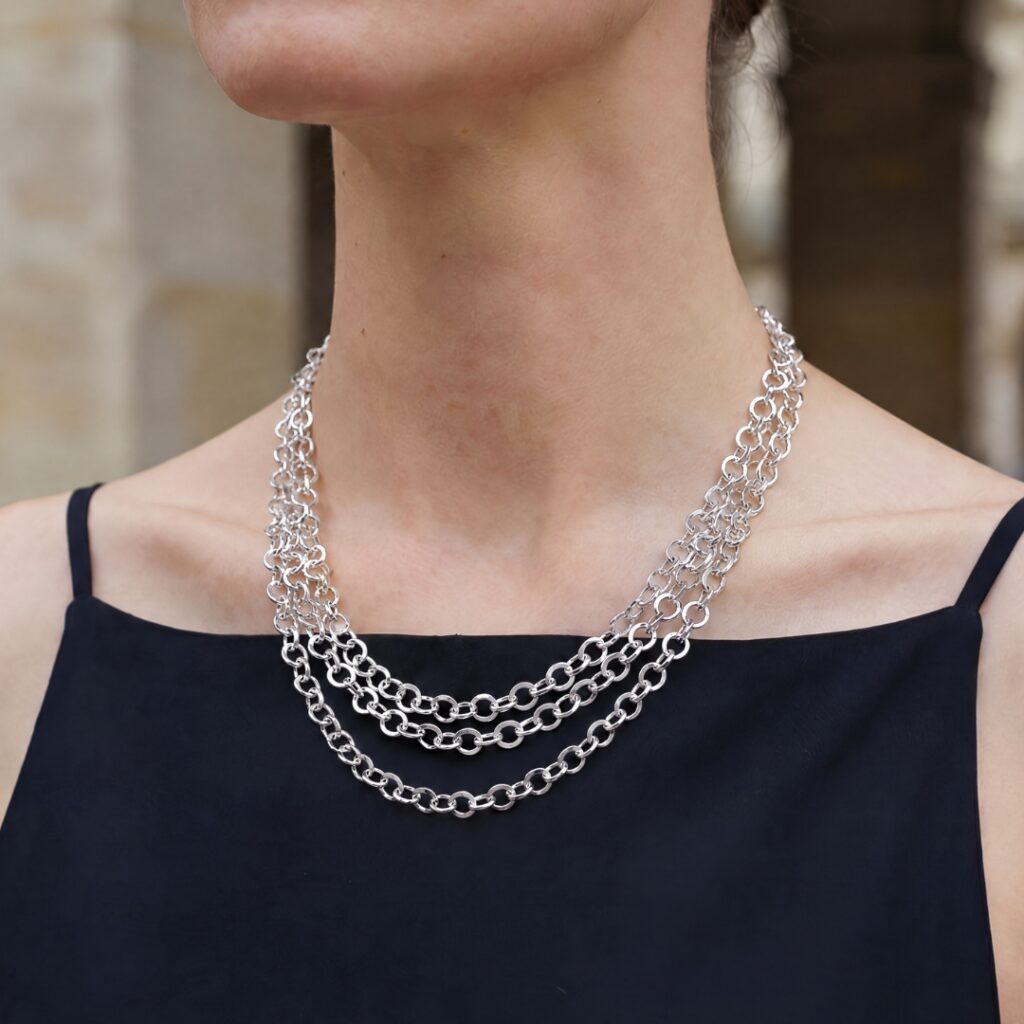











Shiny silver necklaces
Shiny silver necklaces and the desire to capture the light
The history of shiny silver necklaces is closely linked to our natural desire to capture light. Since ancient times, human beings have been fascinated by objects that shine, often associating their glow with value and beauty. For this reason, our ancestors looked at the reflection of the sun on water and the sparkle of the stars with a special sense of wonder, wishing they could hold a small piece of that light.
In those early times, silver itself was not yet widely used, so natural materials with lighter tones were chosen to create personal adornments. This is how the first shiny necklaces appeared, crafted in simple and artisanal ways using polished stones and shells that naturally reflected the light.
The silver tone has always had a special connection with the moon, and its clean, luminous appearance naturally draws attention.
The earliest shiny silver necklaces were not as sophisticated as the ones we know today, but they fulfilled their main purpose: helping those who wore them feel protected and special.
Metals in ancient civilizations
Our ancestors were fascinated by bright, pale metals. While gold was associated with the sun, white metals and silver carried a sense of mystery, calmness and elegance.
In Ancient Egypt and Mesopotamia, silver was harder to obtain, and in many cases it was even more valued than gold. Wearing silver necklaces therefore became a symbol of high social status. At the same time, people believed these shiny silver necklaces possessed magical properties, capable of warding off negative energies and attracting the good fortune of the stars.
These shiny silver necklaces were often reserved for special occasions such as rituals, celebrations or important gatherings. In these moments, the light reflected by silver naturally highlighted the person wearing the necklace.
The artisans of that time did not have the electrical tools we use today to craft jewelry or other objects. Even so, they managed to polish the metal until it reflected light almost like a mirror. They also set transparent gemstones or natural crystals into the silver, adding the shimmering sparkle that makes these pieces so captivating.