





Sold out


Sold out


Sold out


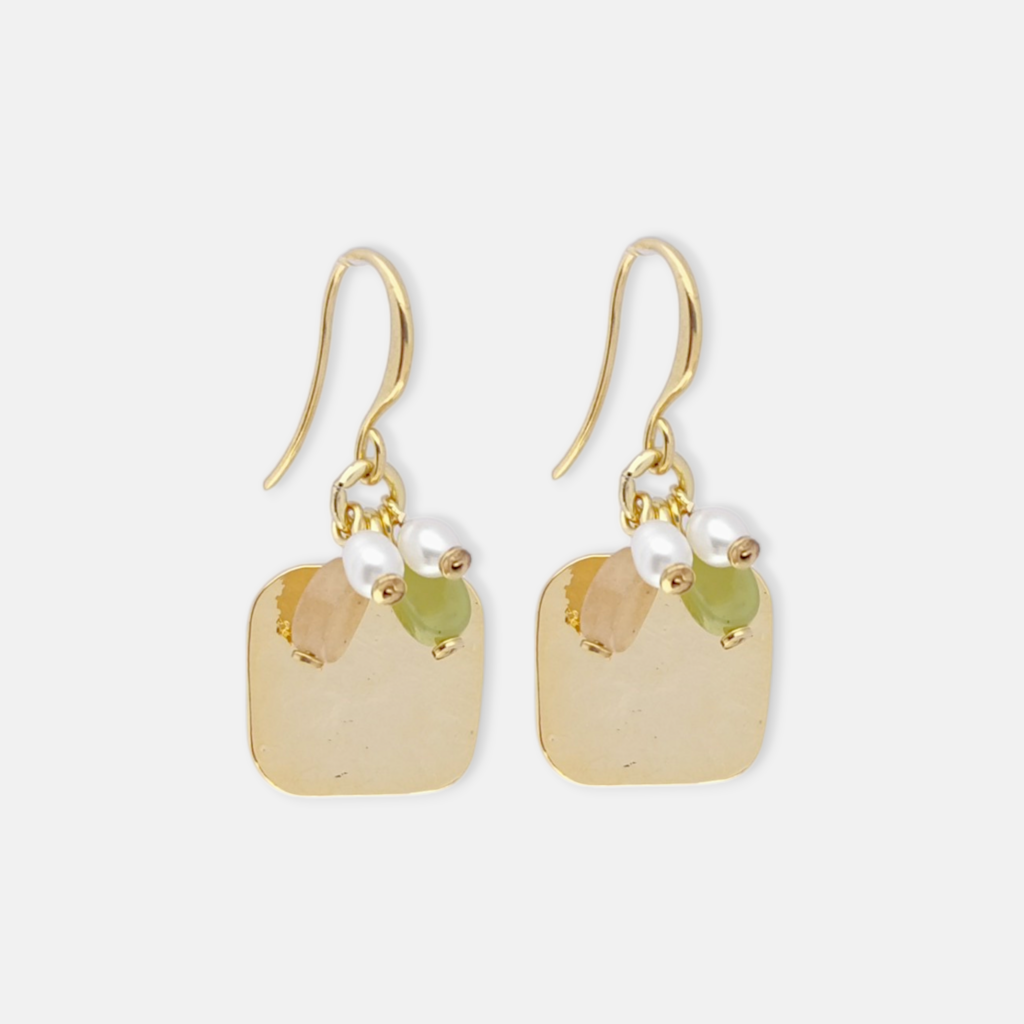



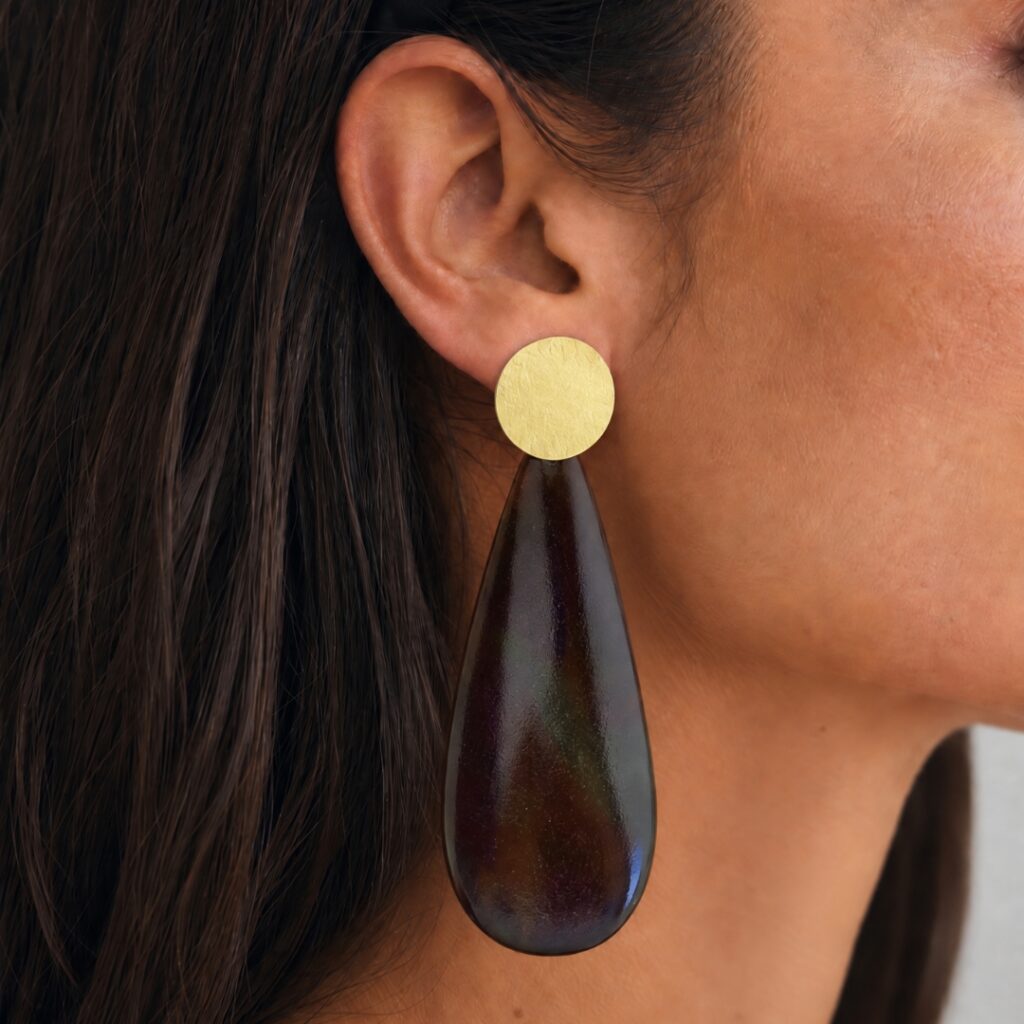


Long earrings
Earrings, a thousand-year-old history
The origin of earrings dates back thousands of years, accompanying humanity throughout history. These earrings, which attract attention and enhance the face with movement and elegance, have a rich history in the world of fashion. In this way, these ornaments have reflected the culture of different civilizations, as well as the traditions and trends of each era.
Beyond their purely aesthetic function, long dangling earrings have often symbolized power, status, and even beliefs.
The earliest evidence of the use of earrings can be found around 3.000 B.C. in Mesopotamia. At that time, both women and men wore this type of earring as a symbol of hierarchy and wealth.
The materials used to make these jewels were varied, ranging from wood and bone to precious stones, silver, or gold.
In Ancient Egypt, the nobility and the pharaohs wore long earrings as a symbol of social position. In most cases they were crafted with intricate designs, precious stones, gold, or silver. Their design could also carry a religious meaning, often represented by symbols of sacred or divine animals.
Later, in Ancient Rome and Greece, long earrings became an essential accessory for women, who wore them to highlight their beauty and elegance.
During this time, long dangling earrings prevailed as a fashion accessory among the upper classes, as a symbol of distinction. In these civilizations, these jewels were also associated with sensuality and beauty. Aphrodite, the goddess of love and desire, was often depicted wearing long earrings.
In Rome, the materials used were more varied, including bone, amber, and ivory, and they were decorated with mythological figures and engravings.
The Middle Ages and the Renaissance, a touch of sophistication
During the Middle Ages, the use of long dangling earrings experienced a significant decline in Europe due to the influence of the Catholic Church, which restricted their use because ostentatious jewelry was considered an element associated with vanity and frivolity.
Their decline was also due to the appearance of hats and voluminous hairstyles.
However, with the arrival of the Renaissance, this type of earring came back into fashion, regaining strength and popularity among the upper classes and the nobility.
Likewise, artists of the time, such as Leonardo da Vinci, very often painted their models wearing long earrings, which helped popularize them once again.
These accessories adopted more ornate and elaborate forms that changed the previously established landscape of jewelry.
Precious materials such as silver or gold, and pearls, were the favorite elements for creating these jewels, and the designs were inspired by nature, mythology, and religious motifs.
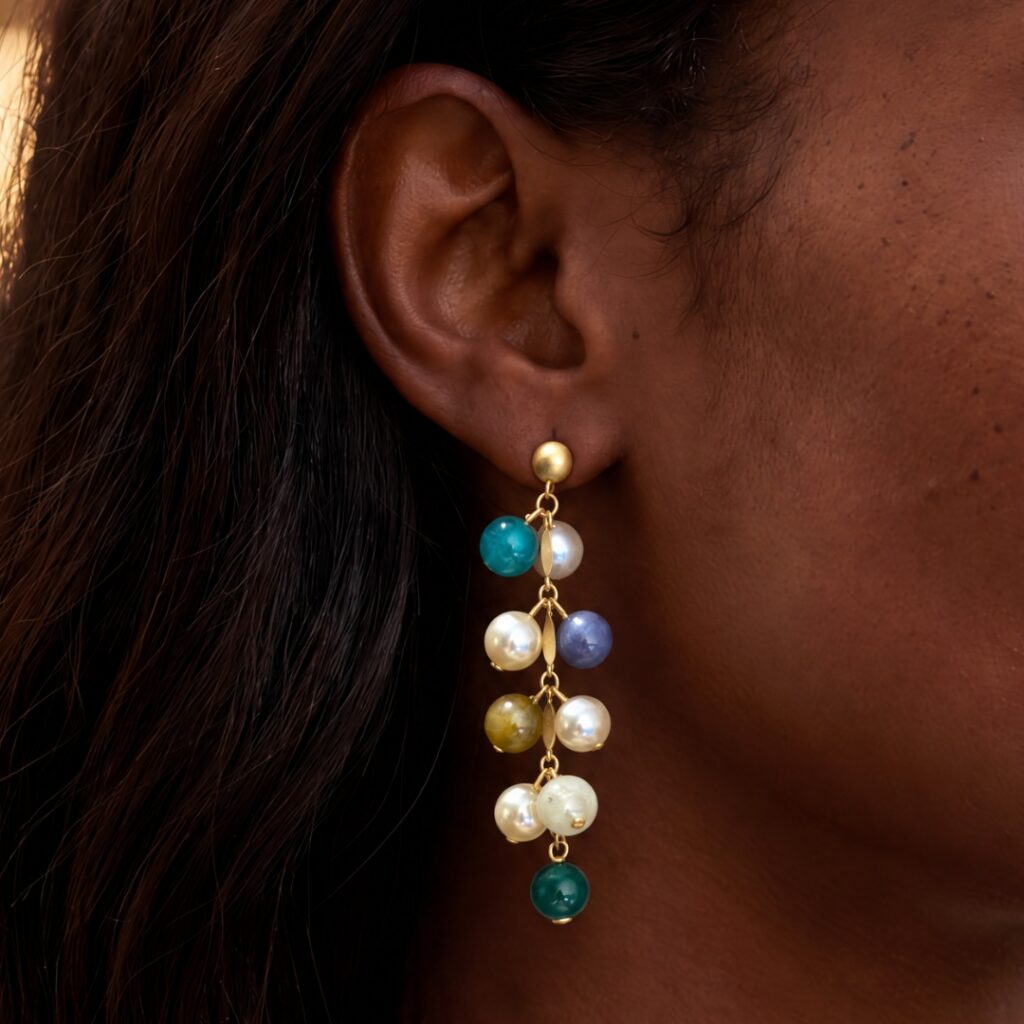
The Capri Earrings will dazzle you with their fine and creative design given by their metal links with a shiny gold finish.
The Boho Earrings are very striking long pendants thanks to their thin chain finished in old gold and tears made with resins.