


Sold out


Sold out


Sold out





Sold out
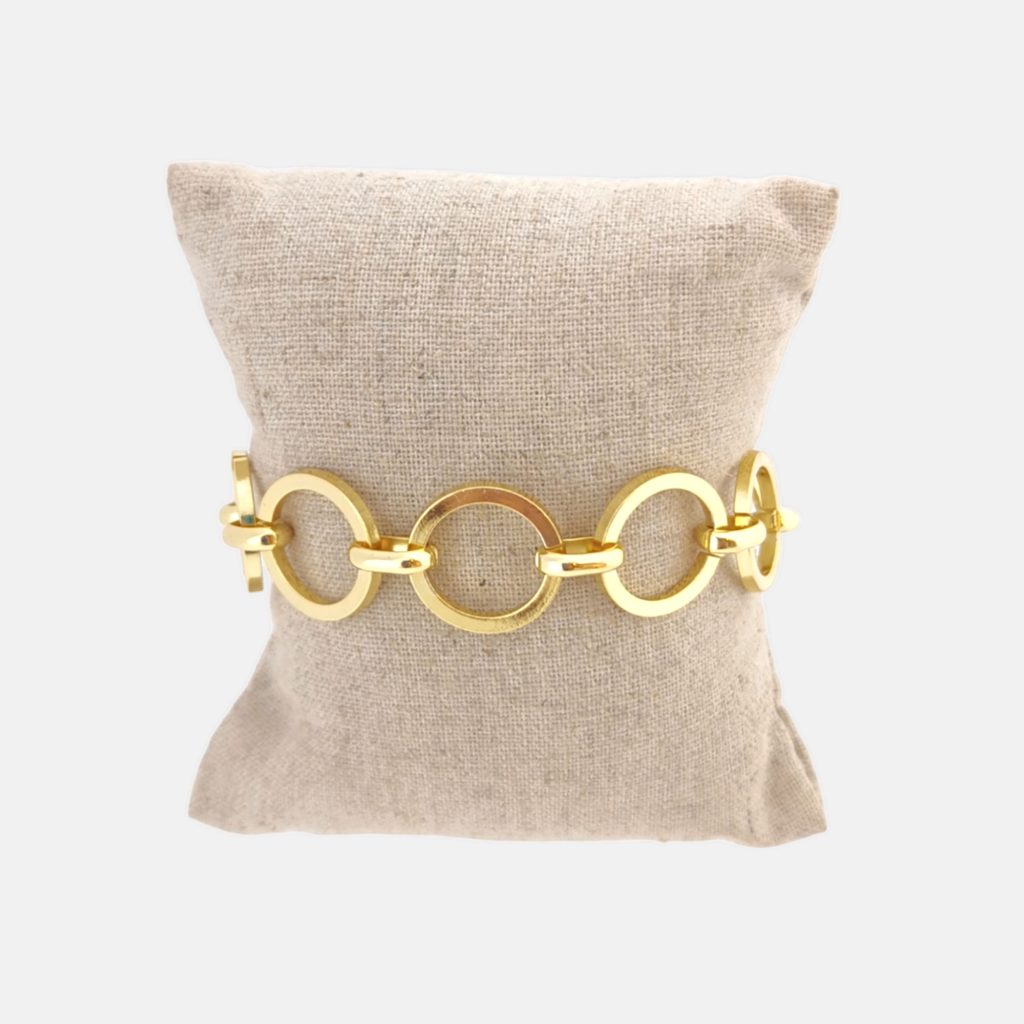
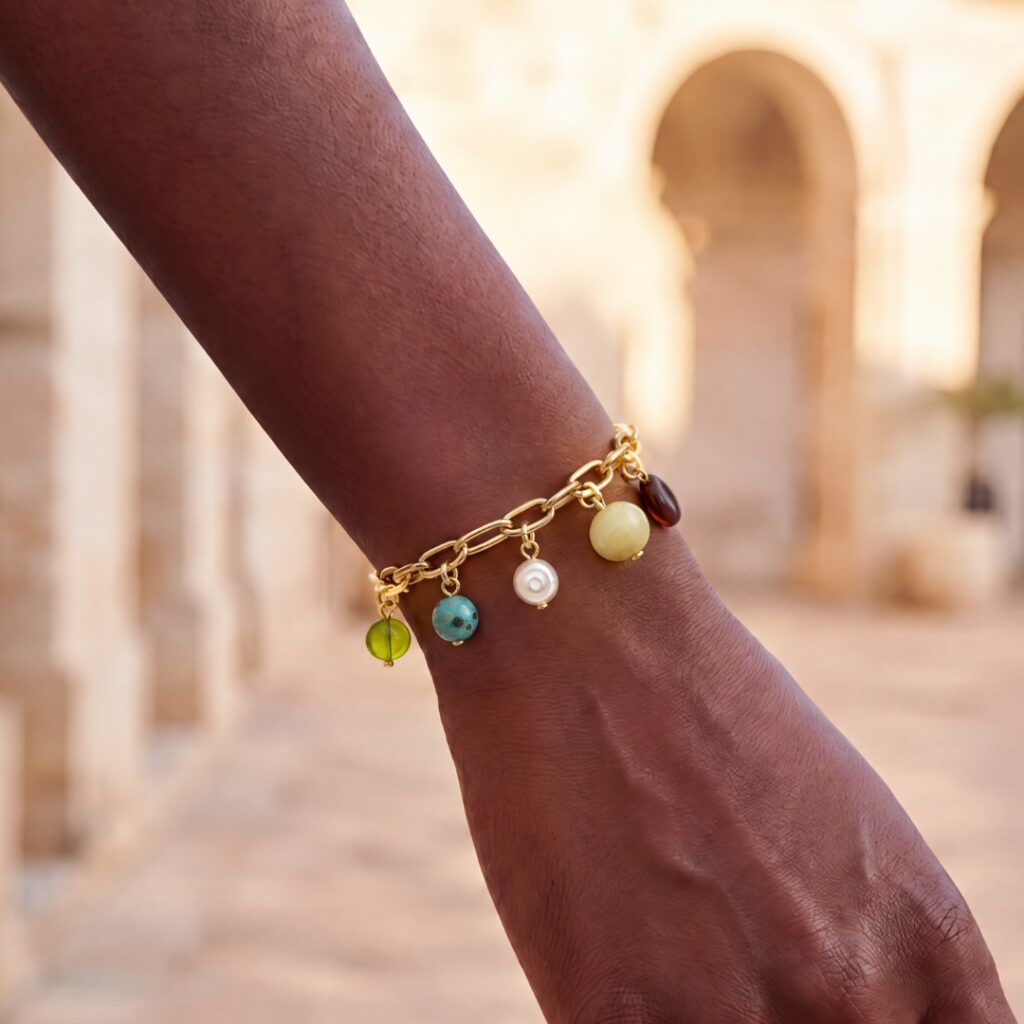


Sold out

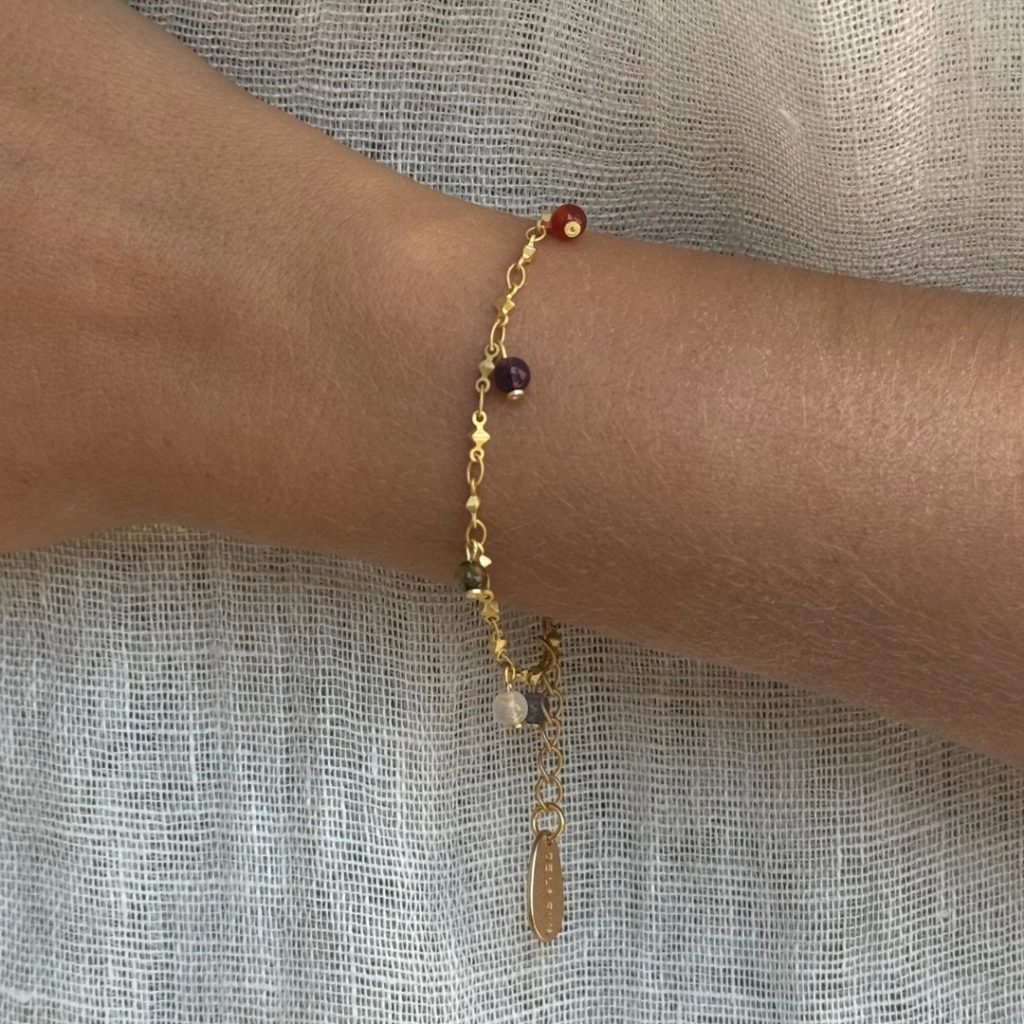
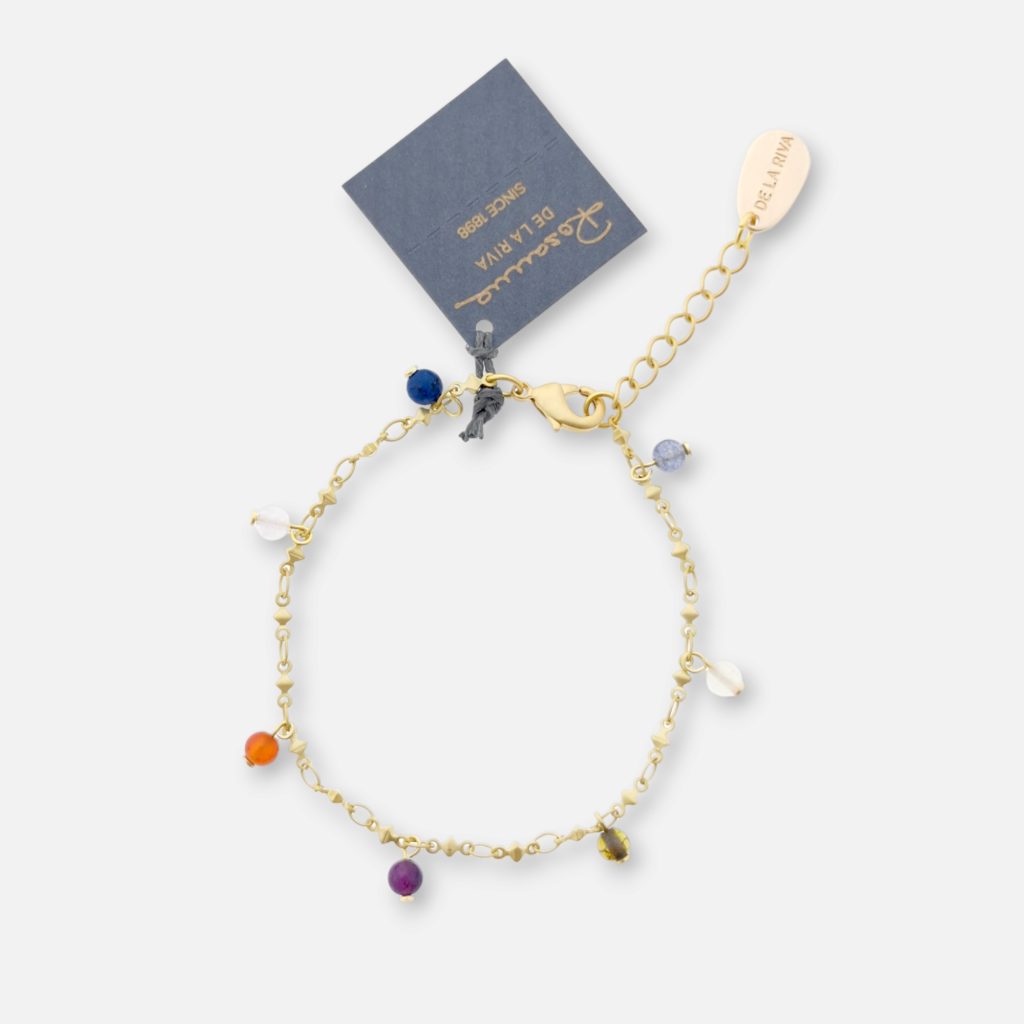



Chain bracelets
Chain bracelets in Ancient Egypt
The use of bracelets dates back thousands of years. Although not all early bracelets were made of chains, they featured similar elements, such as small parts joined together to form a flexible piece.
The earliest civilizations were already creating adornments, such as chain bracelets or bangles, to beautify the body. In Ancient Egypt, both women and men wore bracelets—some made of braided leather and others crafted from metals such as bronze or gold—and they were decorated with beads or colored stones. They also featured symbols such as sacred animals, the Eye of Horus, or the scarab, all of which carried special meanings.
The egyptians placed great value on symbolism and spirituality, so chain bracelets were not worn solely for adornment. Wearing jewelry was a way to honor the gods and to protect oneself from evil spirits; therefore, jewelry was worn in life and in death. For this reason, many people were buried with their rings, necklaces, and chain bracelets so they could use them in the afterlife.
Although the egyptians used simple tools, they possessed great skill in metalworking. As a result, the earliest chain bracelets were made from small, handmade links joined together one by one. Fine chains began to flourish in the form of chain bracelets and necklaces. They could be thick or delicate, depending on who wore them.
While jewelry was worn across all social classes, the most elaborate pieces were reserved for the elite. Nobles, pharaohs, priests, and high officials wore chain bracelets made of precious stones or gold. These designs were a sign of wealth, but they also expressed respect for the order of the universe and the gods.
However, poorer citizens wore simpler bracelets made from shells, clay beads, or less valuable metals, which could be part of special gifts or amulets.
Artisans also combined stones such as lapis lazuli, turquoise, or carnelian—known for their bright colors—with beads in their creations. These stones were highly valued, as they were believed to possess special powers. Lapis lazuli, for example, represented the sky and was thought to bring wisdom.
Chain bracelets were not always entirely metallic. Some combined braided linen, metals with leather, or plant fibers, creating highly decorative pieces that were flexible, comfortable to wear, and had a sense of movement.